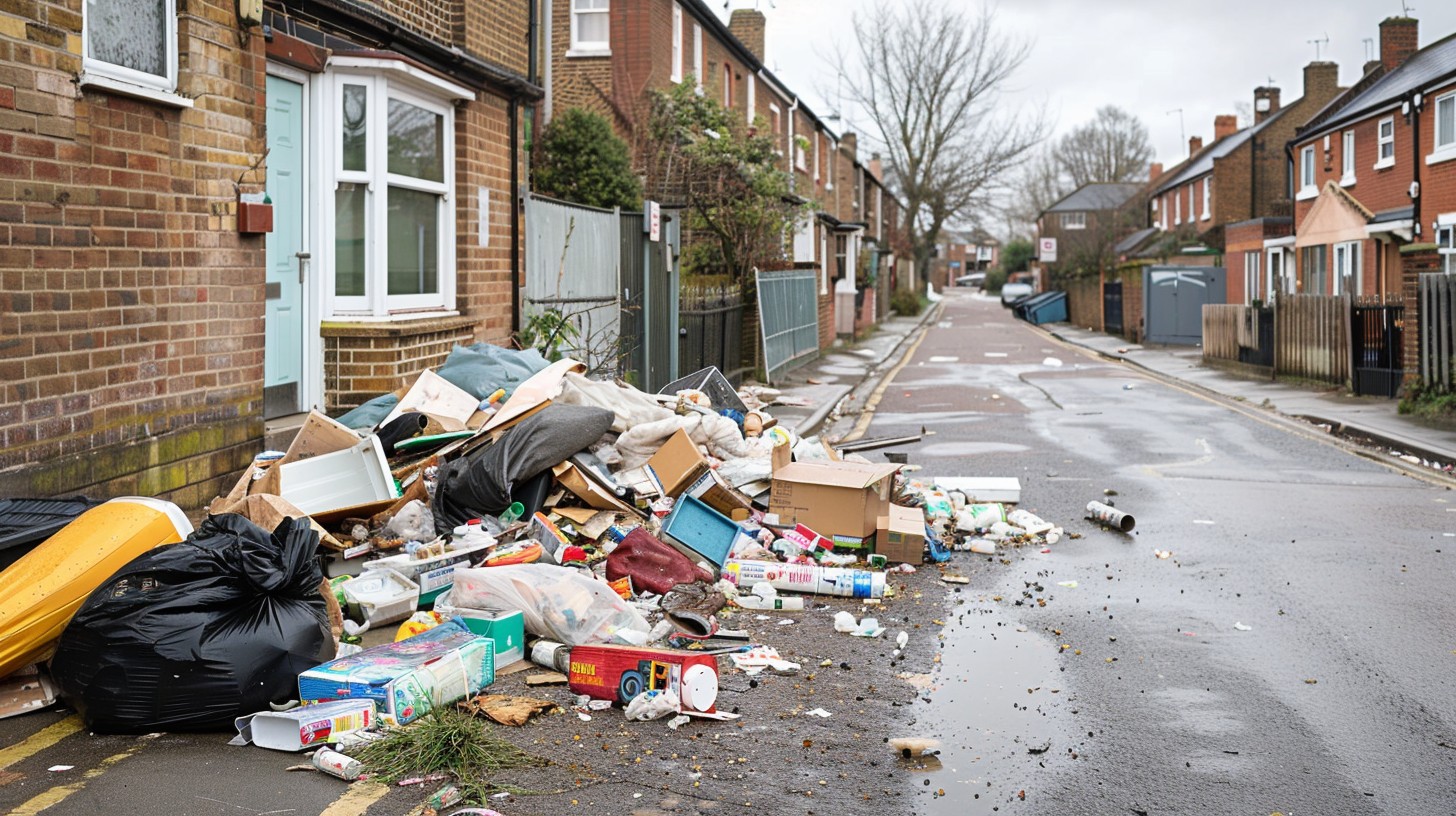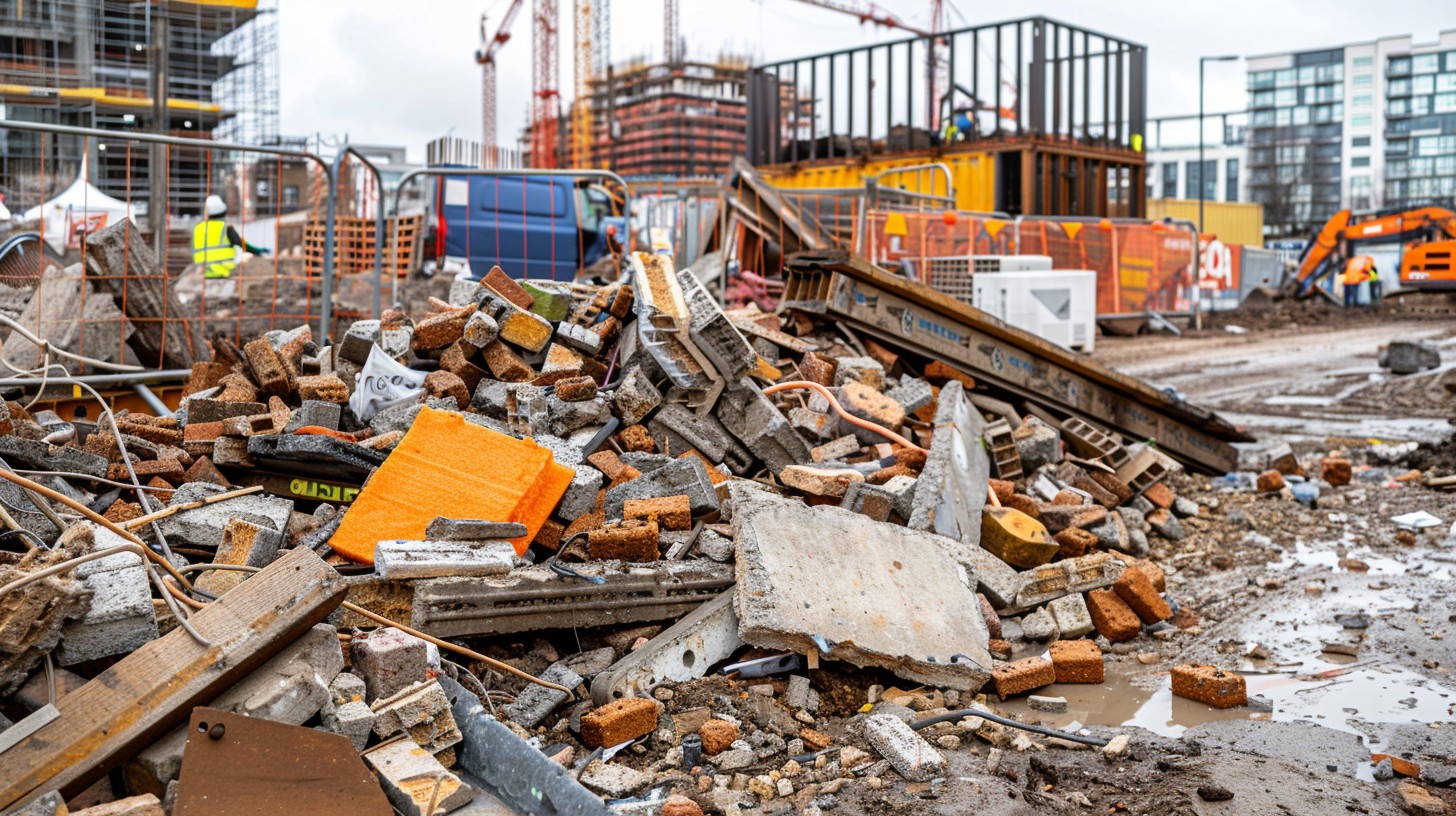
London is a city in a permanent state of reconstruction. On any given weekday, hundreds of sites across the capital are being stripped back, dug out, knocked down, or built up – Victorian terraces being extended, commercial buildings being gutted and refitted, infrastructure projects eating through miles of earth and concrete. All of that activity produces waste on a scale that most people, even those living next door to an active site, rarely stop to consider. Construction and demolition waste is the single largest waste stream in the UK by volume, accounting for well over half of all waste produced nationally each year. In London, where the pace and density of building activity is unmatched anywhere else in the country, the question of where all that material goes is one worth following from beginning to end.
What Construction and Demolition Waste Actually Consists Of
Before tracing the journey, it helps to understand what construction waste actually is – because the category is far more varied than the mental image of a skip full of broken bricks might suggest.
Concrete and masonry make up the largest proportion by weight, generated by demolition, structural alterations, and groundworks. Soil and excavation material – known in the industry as spoil – comes second, produced in enormous quantities by basement conversions, foundation work, and infrastructure projects. Timber, in the form of structural timbers, joinery, and formwork, is present on virtually every site. Metals – steel reinforcing bar, copper pipe, aluminium window frames – represent a smaller proportion by weight but a significant one by value. Plasterboard, insulation, roofing materials, ceramics, glass, and a range of packaging and plastic materials make up the remainder of a typical mixed construction waste load.
The composition of the waste matters because it determines what can be recovered, what requires specialist handling, and what the realistic end destination of each material stream actually is.
When a Building Comes Down – The Demolition Stage
The journey begins at demolition, and the approach taken at this stage has a disproportionate influence on how much of the resulting material can be recovered and reused. There are two broad approaches in practice across London sites: conventional demolition, in which a structure is brought down and the resulting mixed material is processed afterwards, and selective or soft-strip demolition, in which reusable and recyclable materials are systematically removed before any structural work begins.
Soft-strip demolition is more labour-intensive and requires more upfront planning, but it produces cleaner, more separable material streams that command better prices at processing facilities and are more likely to be genuinely recycled rather than downcycled or sent to landfill. On larger London projects – commercial refurbishments, public sector buildings, and any site subject to detailed planning conditions around sustainability – soft-strip is increasingly standard. On smaller residential jobs, it remains the exception rather than the rule.
From Site to Weighbridge – How Waste Is Classified and Transferred
Once material leaves a construction site, it enters a regulated chain of custody governed by the Duty of Care provisions of the Environmental Protection Act 1990 and the more specific requirements of the Hazardous Waste Regulations. Every transfer of construction waste must be accompanied by a waste transfer note describing the type and quantity of material, the parties involved, and the intended destination. For hazardous materials – which on construction sites typically includes asbestos, lead paint residues, contaminated soil, and certain adhesives and sealants – more detailed consignment notes and specialist carrier authorisation are required.
The first physical destination for most London construction waste is a weighbridge at a licensed transfer station or materials recovery facility, where loads are recorded by weight and checked against the documentation. This is where the regulatory paper trail that began on site is continued and where the first sorting decisions are made.
The Materials Recovery Facility – Where Sorting Happens
Materials recovery facilities – MRFs, in industry shorthand – are the largely invisible infrastructure through which London’s construction waste is processed. Mixed loads arriving from sites are sorted, either mechanically, manually, or through a combination of both, into separate material streams that can be directed to appropriate end markets.
Concrete and hardcore are typically crushed on-site or at dedicated crushing facilities into recycled aggregate – a material with a well-established market in construction. Metals are extracted magnetically or by hand and sent for smelting and reprocessing. Clean timber is chipped for use in biomass energy or panel board manufacturing, though contaminated or painted timber has fewer options. Plasterboard, if segregated cleanly, can be recycled into new plasterboard or used as a soil amendment in agriculture – but only if it has been kept separate from other waste streams, because mixed plasterboard creates the landfill gas problem described in the skip hire article.
The recovery rate from a well-sorted construction waste load arriving at a competent facility is high – in some cases exceeding 90 per cent by weight. The recovery rate from a poorly sorted, mixed load is considerably lower, and a meaningful proportion of that material ends up in residual waste destined for energy recovery or, in the least favourable outcome, landfill.
The Demolished Wall Becomes a New Road – Recycled Aggregate in Practice
Of all the material flows in London’s construction waste system, the transformation of crushed concrete and masonry into recycled aggregate is the most straightforward, the most mature, and the most directly visible in the built environment – even if most people driving over it would never know.
Recycled aggregate produced from crushed concrete is classified under BS EN 12620 and related standards, and it is approved for use in a wide range of applications including road sub-base construction, drainage layers, car park surfacing, and the lower structural layers of new building foundations. Transport for London, Highways England, and local borough councils are all significant users of recycled aggregate in road maintenance and construction – which means that material demolished from a London building may, within months, be sitting beneath a road surface a few miles away.
The economics of recycled aggregate are straightforward. Virgin aggregate – quarried stone and gravel – carries both a material cost and the Aggregates Levy, currently set at £2.03 per tonne. Recycled aggregate undercuts that price, is available close to the point of use in a city where transport costs are significant, and its use contributes to sustainability benchmarks that larger construction contracts increasingly require. Demand for quality recycled aggregate in London consistently outstrips local supply, which is one reason why well-sorted construction waste commands a better gate price at processing facilities than poorly sorted mixed loads.
The Difficult Materials – What Cannot Be Easily Recovered
Not all construction waste moves through the system as cleanly as crushed concrete. Several material categories present persistent challenges that no amount of good site practice fully resolves.
Asbestos remains the most serious. London’s building stock contains a significant legacy of asbestos-containing materials – cement sheeting, pipe lagging, floor tiles, textured ceiling coatings, and more – across properties built or refurbished before the mid-1980s. Asbestos waste requires double-bagging, specialist licensed carrier collection, and disposal at a permitted hazardous waste landfill. There is no recovery or recycling route for most asbestos-containing materials. The regulatory requirements are non-negotiable, and the consequences of non-compliance – for both site workers and building occupants – are severe enough that responsible contractors treat asbestos identification and removal as a foundational pre-demolition step rather than an afterthought.
Contaminated Soil and the Challenge of Excavation Waste
Excavation spoil presents a different but equally significant challenge. London’s industrial history has left a complex legacy of ground contamination across former industrial sites, railway corridors, and gas works locations – and the capital’s current development pipeline is heavily focused on precisely these kinds of brownfield sites. Soil from these locations cannot be disposed of as inert material. It must be classified, tested, and in many cases treated before it can be reused or landfilled.
Clean, uncontaminated excavation spoil has a legitimate second life as fill material for land reclamation, landscaping, and infrastructure earthworks. In London, where the Crossrail project alone generated millions of tonnes of excavated material, the logistics of finding appropriate destinations for clean spoil at scale have driven significant innovation – including the creation of new coastal and estuarine habitats using excavated London clay. For contaminated material, the options narrow considerably, and treatment or containment adds substantially to the cost of any project working with affected ground.
Why Better Site Practice Changes the Destination
The single most powerful determinant of where London’s construction waste ends up is what happens on site before the skip or lorry arrives. Material that is sorted at source – concrete kept separate from timber, plasterboard segregated from general rubble, metals set aside for collection, hazardous materials correctly identified and isolated – moves through the recovery system efficiently and reaches high-value end markets.
Material that leaves site as an undifferentiated mixed load is harder and more expensive to sort, yields lower-quality recovered fractions, and is more likely to produce a residual proportion that has no viable recovery route. The difference in disposal cost between a well-sorted and a poorly sorted load can be significant, particularly on larger projects where material volumes are substantial.
London’s planning system has begun to reflect this reality. Major development projects are increasingly required to produce Site Waste Management Plans setting out how material will be managed, segregated, and disposed of – with a growing expectation that recycled content targets and landfill diversion rates will be demonstrated at the end of a project rather than simply committed to at the planning stage. The regulatory direction of travel is clear, and the economics increasingly reinforce it. The demolished wall that ends up beneath a new road rather than in a landfill is not an accident – it is the result of a chain of decisions, beginning on site, that the system is gradually being redesigned to make the default rather than the exception.