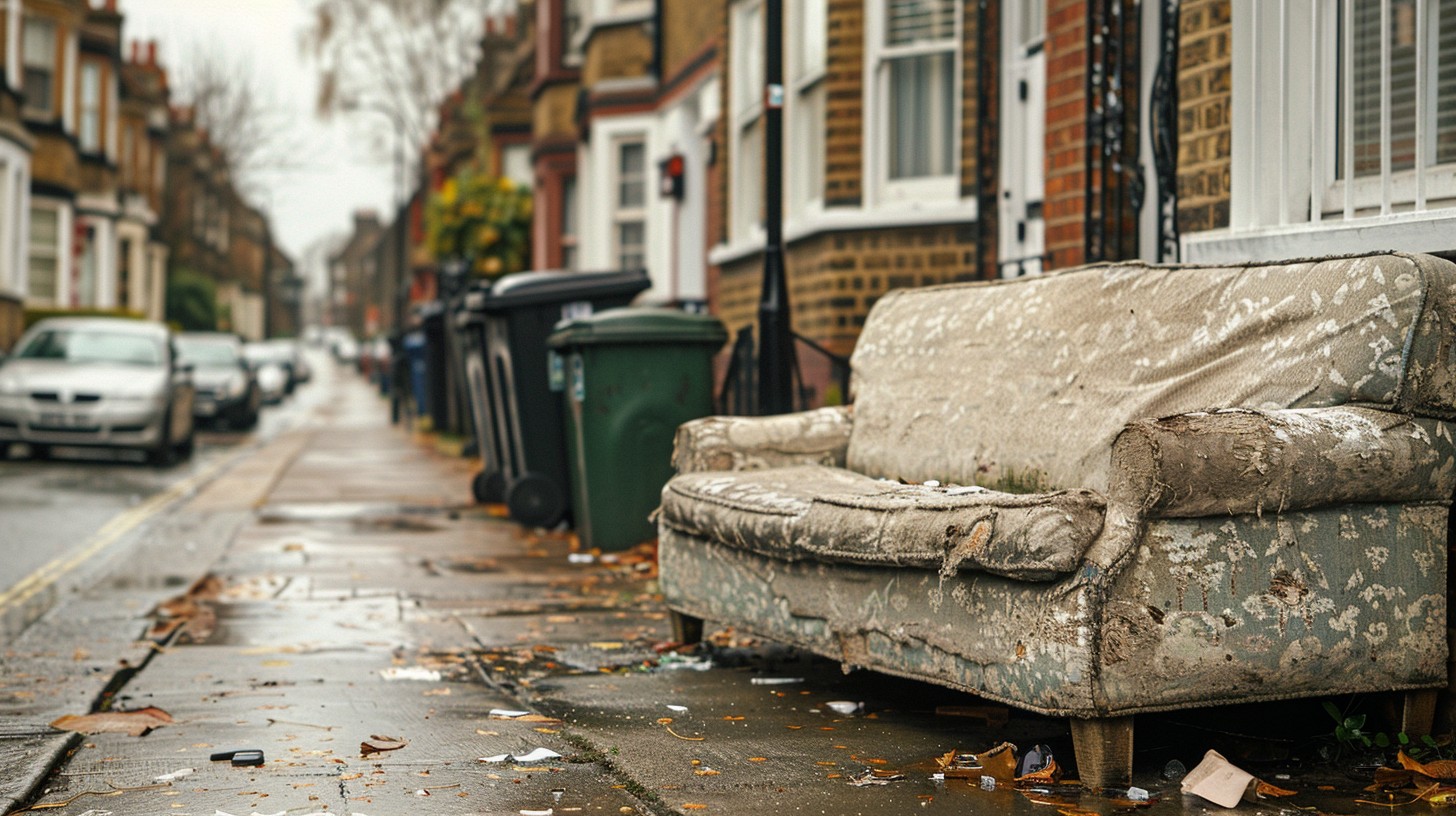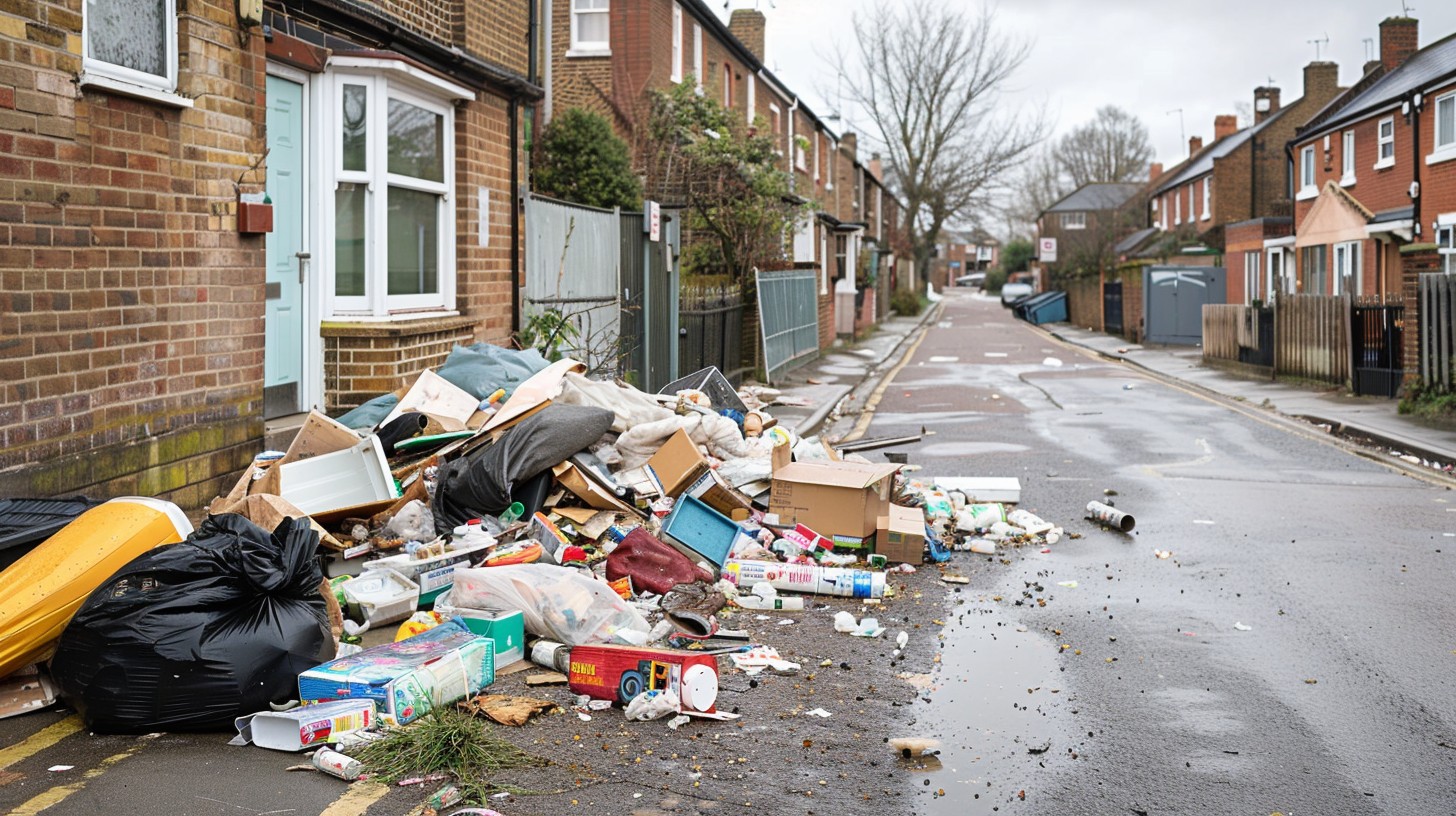
Drive through the wrong street in the wrong borough on the wrong morning and the evidence is hard to miss – a burst mattress propped against a garden wall, black bags split open across a pavement, a heap of plasterboard dumped at the mouth of an alley. Fly-tipping is not a new problem in London, but it is a growing one. Behind every incident is a clean-up operation that somebody has to fund, a community that has to live with the aftermath, and a legal framework that – despite carrying serious teeth on paper – rarely bites in practice. This article cuts through the noise with hard data, honest analysis, and a clear look at where the burden of this crisis actually falls.
The Scale of the Problem – London’s Fly-Tipping by the Numbers
The most recent figures published by the Department for Environment, Food and Rural Affairs (Defra) recorded over one million fly-tipping incidents across England in a single year – and London accounts for a disproportionately large share. Individual London boroughs routinely report tens of thousands of incidents annually, with the total across the capital running into the hundreds of thousands each year. The trend line, despite periodic crackdowns, points stubbornly upward.
What makes London’s situation distinct is not just the volume but the density. Incidents cluster around residential back streets, industrial estate peripheries, and roadsides where oversight is limited and access is easy. The sheer pace of construction and population turnover in the capital means there is never a shortage of waste looking for the quickest possible exit.
Which London Boroughs Are Worst Affected?
The problem is not evenly distributed. Boroughs in inner and east London – areas characterised by higher population density, greater housing turnover, and proximity to active construction – consistently record the highest incident rates. However, it would be a mistake to read this purely as a deprivation story. Fly-tipping occurs across the full socioeconomic spectrum; what correlates more reliably with hotspot status is the density of rental properties, the volume of small-scale building work, and the availability – or lack – of convenient, affordable disposal options nearby.
Some boroughs have seen meaningful reductions through targeted camera deployment and enforcement campaigns. Others continue to record year-on-year increases despite similar interventions, which suggests that enforcement alone is not sufficient as a long-term strategy.
What Gets Dumped – and Why It Ends Up on the Street
The composition of fly-tipped waste in London follows a fairly consistent pattern. Household items dominate – mattresses, sofas, and white goods make up a substantial proportion of larger dumps. Bagged household waste is the most common category overall, followed by construction and demolition rubble, garden waste, and electrical items. Each category has its own logic for ending up on the street rather than at a licensed facility.
For household items, the trigger is usually cost or inconvenience. Most London councils charge for bulky waste collection, and waiting times can stretch across several weeks. For construction rubble, the maths is blunter – licensed disposal is not cheap, and the temptation to save money by dumping a van-load down a quiet side road is one that unscrupulous operators act on regularly.
The Role of Rogue Clearance Traders in London’s Fly-Tipping Crisis
One of the most underreported drivers of fly-tipping in London is the rogue waste carrier – an individual or company that charges householders for collection and then dumps the waste illegally rather than disposing of it through licensed channels. These operators are often found advertising on social media, through door-to-door canvassing, or on community noticeboards, offering clearance at rates that legitimate, licensed companies cannot match.
The legal exposure for the person who hires them is frequently misunderstood. Under the Environmental Protection Act 1990, a householder has a Duty of Care to ensure their waste is transferred to an authorised person. If a rogue trader dumps waste bearing your details – an old bill, a piece of addressed post among the rubbish – you can be pursued for that offence even though you paid someone else to deal with it. Checking a carrier’s licence on the Environment Agency’s public register takes under two minutes and carries significant legal protection. Not checking carries real risk.
Who Pays the Price? The Real Cost of Fly-Tipping in London
The financial burden of fly-tipping falls primarily on local councils – which means, ultimately, on the taxpayer. Defra’s data shows that English councils spend hundreds of millions of pounds annually on fly-tip clearance, with London’s boroughs collectively absorbing a substantial portion of that figure. The cost per incident varies considerably depending on the size and composition of the dump, but even a modest roadside tip runs to several hundred pounds once collection, disposal, and administrative costs are factored in.
For businesses and private landowners, the picture is worse. If fly-tipping occurs on private land, the clearance cost falls entirely on the landowner – councils have no legal obligation to remove waste from private property. Farmers, industrial site operators, and private residents in semi-rural parts of Outer London are routinely left to fund clean-up operations on land they did not choose to turn into an unofficial tip.
The Hidden Costs Beyond the Clean-Up Bill
The direct disposal bill is only part of the story. Research into the secondary effects of persistent fly-tipping sites points to measurable reductions in nearby property values, particularly where dumping becomes habitual in specific locations. There is a well-documented broken-windows effect at play – a site that is not cleared promptly tends to attract further dumping, compounding both the cost and the visual blight.
Less quantifiable but no less real is the effect on residents living near persistent hotspots. The links between environmental degradation and diminished community wellbeing are well-established in public health research, and long-running fly-tipping problems in residential streets are consistently cited in community consultations as a source of stress and reduced local pride.
When the waste involved includes hazardous materials – solvents, asbestos, batteries, or paint – the ecological stakes rise further. These materials can leach into soil and local waterways, with remediation costs that dwarf a standard clearance job.
What the Law Says – Penalties, Enforcement, and Why Prosecutions Are So Rare
The legal framework around fly-tipping carries penalties that are, on paper, genuinely severe. Fixed penalty notices of up to £1,000 can be issued for minor offences. More serious cases prosecuted through the courts carry unlimited fines, and repeat or large-scale commercial fly-tipping can result in custodial sentences. Councils also have powers to seize and crush vehicles used in fly-tipping operations.
The Environmental Protection Act 1990 remains the primary legislative instrument, supplemented by the Anti-social Behaviour, Crime and Policing Act 2014 and subsequent regulations that have progressively strengthened enforcement powers. The carrier licensing regime, administered by the Environment Agency, is intended to act as the first line of prevention.
Why London Councils Struggle to Prosecute Fly-Tippers
The gap between the powers available and the prosecutions secured is wide – and largely structural. Successful prosecution requires identification of the offender, which in practice demands either witness accounts, usable CCTV footage, or forensic evidence linking the waste to a specific individual. Waste that has been bagged, or that originates from a clearance job rather than a domestic address, often provides neither.
Council enforcement teams are under-resourced relative to the scale of the problem. The competing demands on local authority budgets mean that reactive clean-up consistently takes priority over proactive investigation, which in turn means that deterrence remains weak. A number of boroughs have invested in covert camera networks and some have used DNA analysis of waste to support prosecutions, but these tools are expensive, slow, and logistically demanding at scale.
What Is Being Done – and What Still Needs to Change
The response to London’s fly-tipping problem has become more sophisticated over the past decade, even if the headline numbers remain discouraging. Covert cameras deployed at persistent hotspot locations have generated prosecutions that would not otherwise have been possible. Several boroughs have run coordinated enforcement campaigns targeting rogue traders, working with the Environment Agency to cross-reference carrier licence data against reported dumping sites.
At a national policy level, the government has signalled interest in extended producer responsibility frameworks that would shift more of the cost of certain waste streams onto manufacturers rather than local authorities. Whether that translates into meaningful reduction in street-level dumping remains to be seen.
Could Better Waste Infrastructure Actually Solve the Problem?
There is a compelling argument – one that enforcement-focused approaches tend to sidestep – that a significant share of London’s fly-tipping is driven not by criminal intent but by structural friction. Household Waste Recycling Centres with restricted opening hours, council bulky waste services carrying fees and waiting lists, and a genuinely complex landscape for disposing of WEEE and hazardous materials all create conditions in which illegal disposal becomes the path of least resistance for some residents.
Several European cities have demonstrated that expanding access to free or low-cost legitimate disposal – including more frequent no-appointment bulky collection rounds – produces measurable reductions in fly-tipping rates. The infrastructure investment required is real, but so is the saving on enforcement and clearance.
What You Can Do – Protecting Yourself and Your Community
If you witness fly-tipping, the most useful thing you can do is report it to your local council via the standard reporting portal or through the national Fly-tipping Action Wales and Defra reporting frameworks. Photographs with timestamps and, where safely possible, details of any vehicle involved significantly improve the chances of investigation.
If waste is dumped on your private land, you are responsible for its removal – but you should report it to the council before clearance, as enforcement officers may want to inspect the site for evidence. Keep a record of the incident and the clearance costs, particularly if there is any prospect of identifying the person responsible.
Before handing any waste to a clearance company or individual, verify their licence on the Environment Agency’s public register. A legitimate waste carrier will provide their licence number without hesitation. If someone is unwilling to do so, or if the price being quoted sits well below market rate, that disparity is usually telling you something worth listening to.